AI-assisted QA for home health documentation
QA that starts before review with OASIS Review, Clinical Validation, and Documentation Alignment.

Configured with your QA team
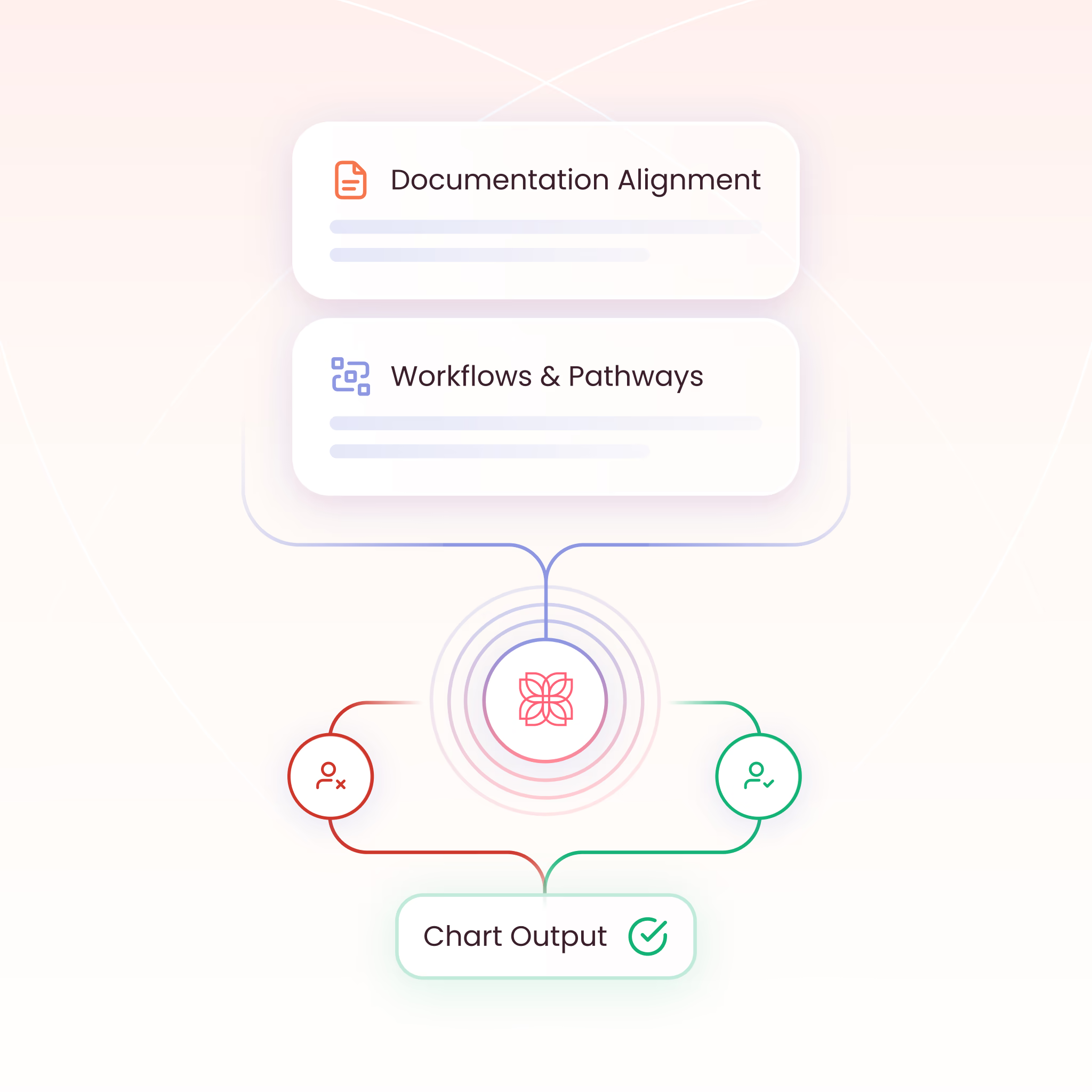
Every agency defines quality differently. Apricot is configured around your pathways, templates, and review expectations, not just your EMR fields.
Aligns documentation to your agency’s standards
Reflects service-line pathways and workflows
Fully auditable—with Apricot you’ll always know who made the edits in your EMR
Reviewed by your clinicians first
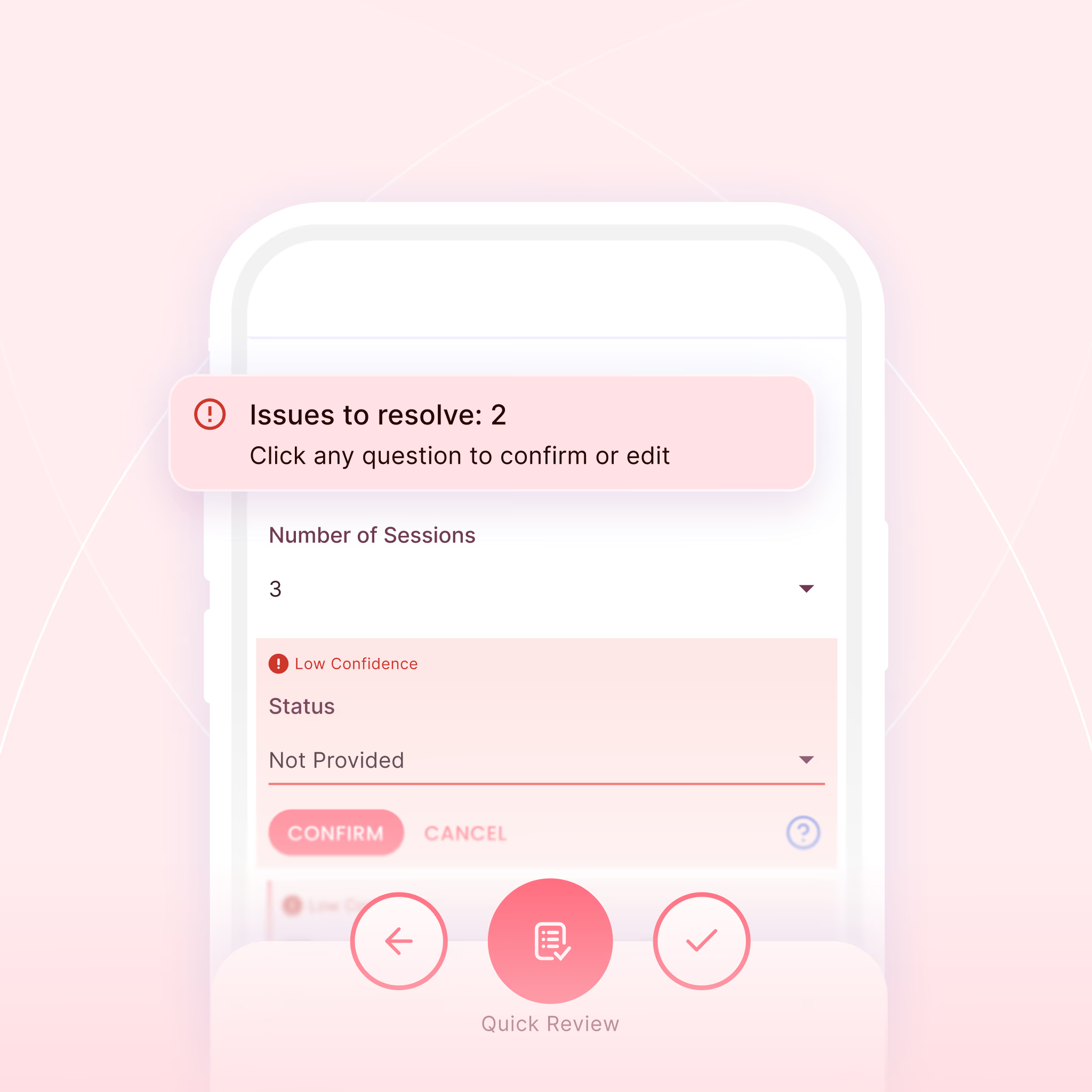
Clinicians review documentation before submission, so gaps and inconsistencies are addressed while the visit is still fresh.
Flags missing or conflicting information
Surfaces unsupported clinical conclusions
Reduces preventable QA corrections
Save QA time on every chart
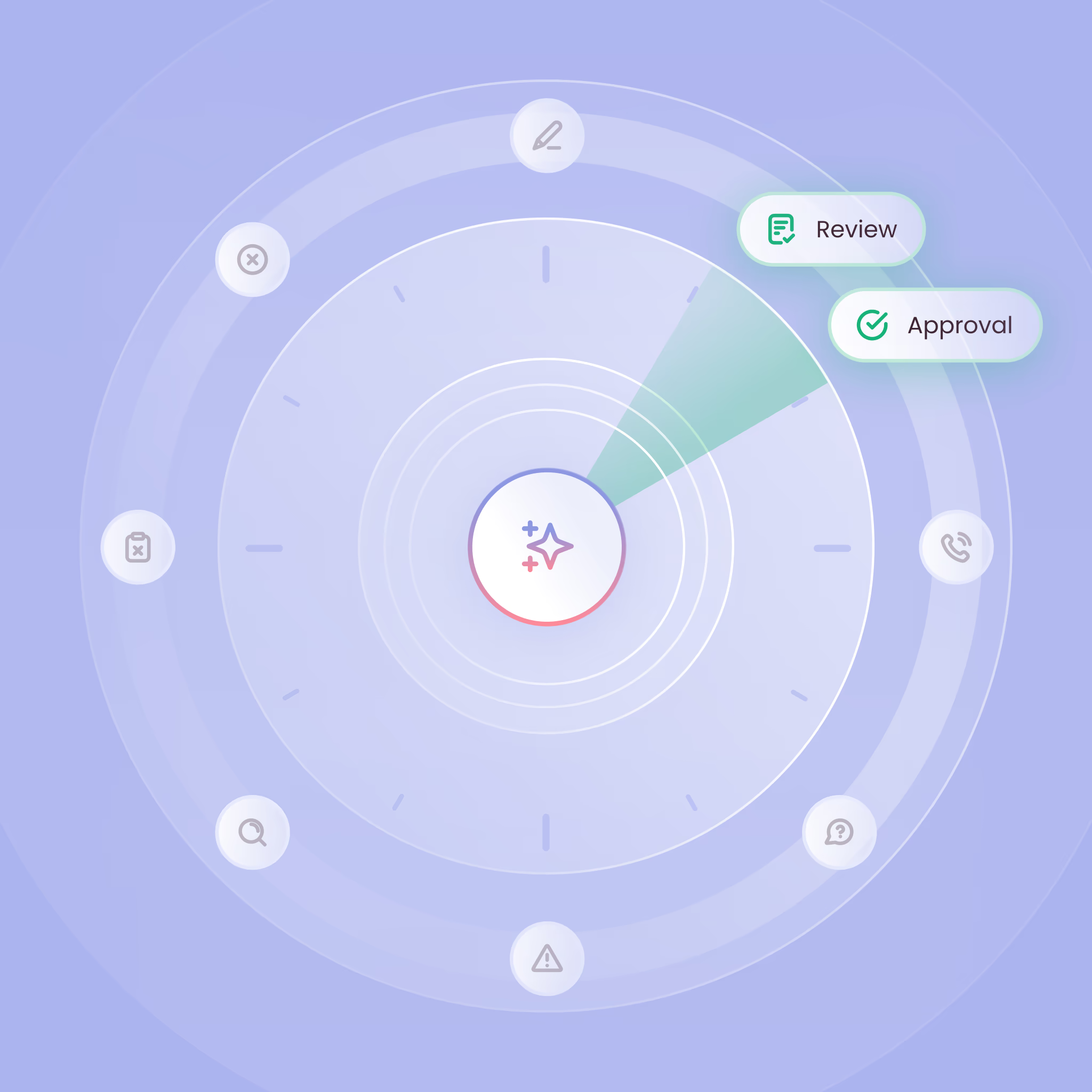
When documentation is more complete and consistent from the start, QA teams can focus on quality instead of cleanup.
Reduces chart rework and clarifications
Improves consistency across clinicians
Shortens review cycles
85%
less time charting
Clinicians using Apricot cut total documentation time by 85%.
40%
more QA productivity
QA teams review 40% more charts in the same time, with fewer revisions.
200%
more patient visits
Less time charting means more time in the home with patients.
96%
Accepted responses
Over 95% of documentation questions are completed and error-free with Apricot.
The industry's most complete documentation integration
We align to your workflows, QA standards, audit requirements, and documentation preferences while staying continuously synced as your EMR evolves. Clinicians complete documentation once in Apricot, and it arrives fully complete in the EMR with nothing left to review, edit, or finish.



FAQs
Explore out most frequently asked questions. If you can’t find the answer you’re looking for, we’re here for you.
It starts during onboarding. Apricot's team works directly with your QA team to configure the platform around your standards: reviewing your QA checklists, audit criteria, templates, and anything else that defines what a complete chart looks like at your agency. That configuration drives how documentation is generated from day one. From there, Apricot continuously reviews clinician edits to evaluate whether agency-specific prompting is working and adjusts accordingly. If something changes or your team wants to see something different, there's a direct line to our support team and we move quickly to make changes.
It doesn't change the work itself. QA reviewers still review charts the same way they always have. What changes is what they're reviewing. Because documentation arrives more complete and consistent, they spend less time chasing clinicians for clarifications and filling in gaps. The goal is to let QA teams focus on quality, not cleanup.
Several things work in your favor. Every piece of documentation Apricot generates includes the reasoning behind it, so there's a clear record of why information was included and how diagnoses were ordered. A full audit trail shows what was generated versus what was edited, and by whom. And because coding and documentation are built together rather than reconciled after the fact, the chart is internally consistent—which is one of the first things auditors look for.
Does Apricot actively check OASIS scoring consistency, or is accuracy a downstream benefit of better documentation upstream?
Yes, and Apricot handles it proactively rather than waiting to be asked. We continuously review edits and output quality to identify opportunities to improve agency-specific prompting. Your team also has a direct feedback loop with our support team. If something isn't working the way you'd like, we move quickly to make changes.
Every great partnership starts with a conversation
See how Apricot partners with agencies like yours to improve documentation quality.