Choice Health at Home reduces documentation time by 85 percent while improving quality.
Agencies can double the number of assessments for clinicians, thanks to documentation time saved with Apricot.


A field clinician's story
Kelly Nida has built a career as a home health clinician. After finishing her shift she would usually spend her nights and early mornings charting at home. It typically came to six extra hours of paperwork a day, three hours per Start of Care assessment, after seeing patients all day.
“I would wake up at 4 a.m. to finish the rest of it. It was so overwhelming,” Kelly says. Even her husband would pitch in to help. “It was our whole nightly routine. I would have my husband read off my hand-written med list as I'm typing it in on Homecare Homebase.
”All around her, colleagues were quitting. “A lot of people left home health because of all the charting,” Kelly recalls. “I remember them saying this, but I just assumed it was an exaggeration.”
“A lot of people left home health because of all the charting,”
After the introduction of Apricot
Today, Kelly actually looks forward to having a SOC on her schedule. That’s because Apricot takes the pain out of documentation with it’s proprietary AI-powered decision engine.
Before Apricot, a SOC meant three hours of documentation. Now, it takes Kelly only 20-30 minutes.
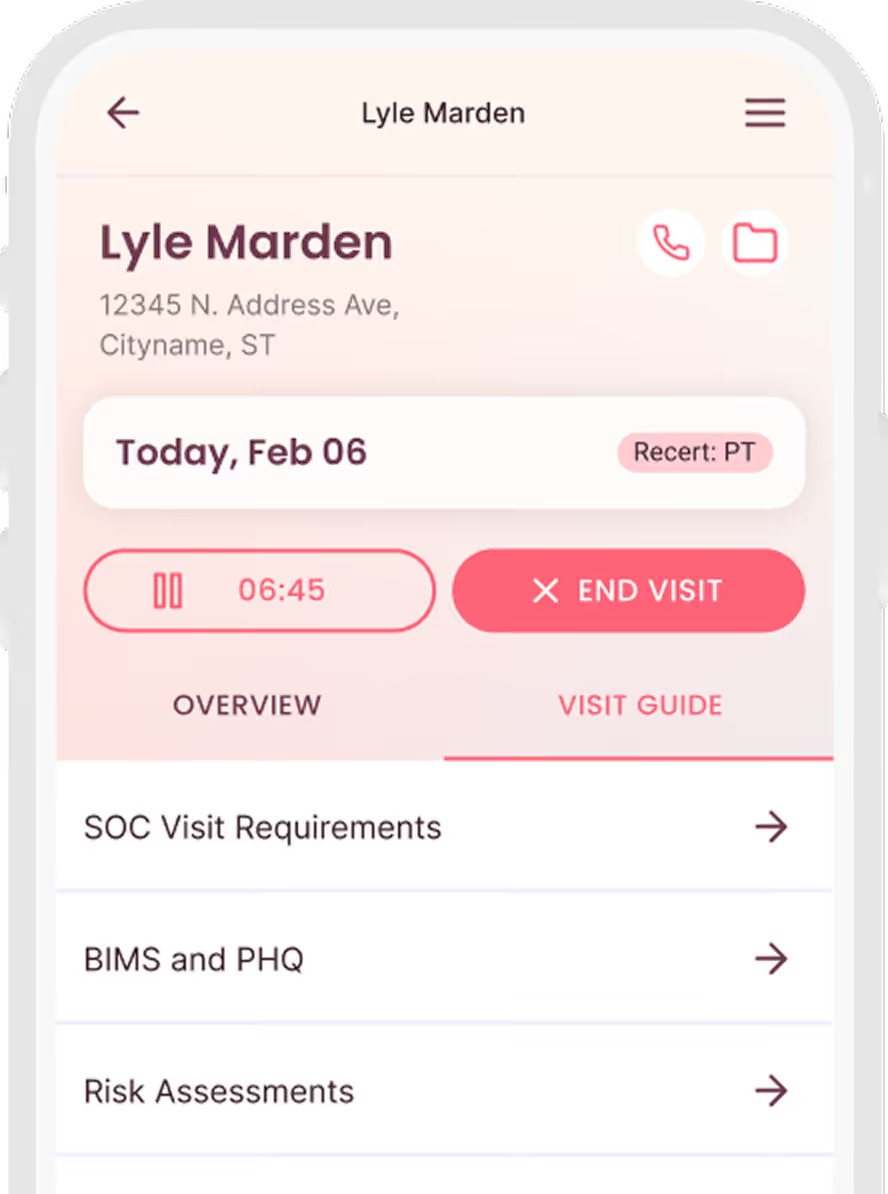
Right after a Start of Care assessment, she spends roughly 15 minutes narrating her observations to Apricot, and just a few more minutes to review and approve the documentation. The time saved allows Kelly to double the number of SOCs in her schedule and see more patients.
Charting has gone from 3 hours to 30 minutes
Without the stress and dread of manual charting, Kelly can focus on what matters most: making sure her patient receives the best care possible.
“I'm looking at the person, I've got my eyes on them rather than trying to take notes,” she explains. “I've given them that human interaction that they need. I get more time to actually have that connection with them.”
Choice Health CEO David Jackson agrees — that human interaction is a key component of patient care, and Apricot helps teams keep that focus. “Apricot is exactly the type of innovation our industry needs,” Jackson says. “[It’s] technology that supports clinicians, improves efficiency and quality, and ultimately helps teams stay focused on patient care.”
“Apricot is exactly the type of innovation our industry needs. It’s technology that supports clinicians, improves efficiency and quality, and ultimately helps teams stay focused on patient care.”
Medication lists and wound care documentation mean massive time savings
Two Apricot features in particular helped Kelly drastically reduce documentation time: medication lists and wound care.
These two sections take the longest, Kelly explains, because without Apricot, “you’re manually putting in 25 medications, the reason the patient is on them, when they started taking them, when they stopped,” she explains.
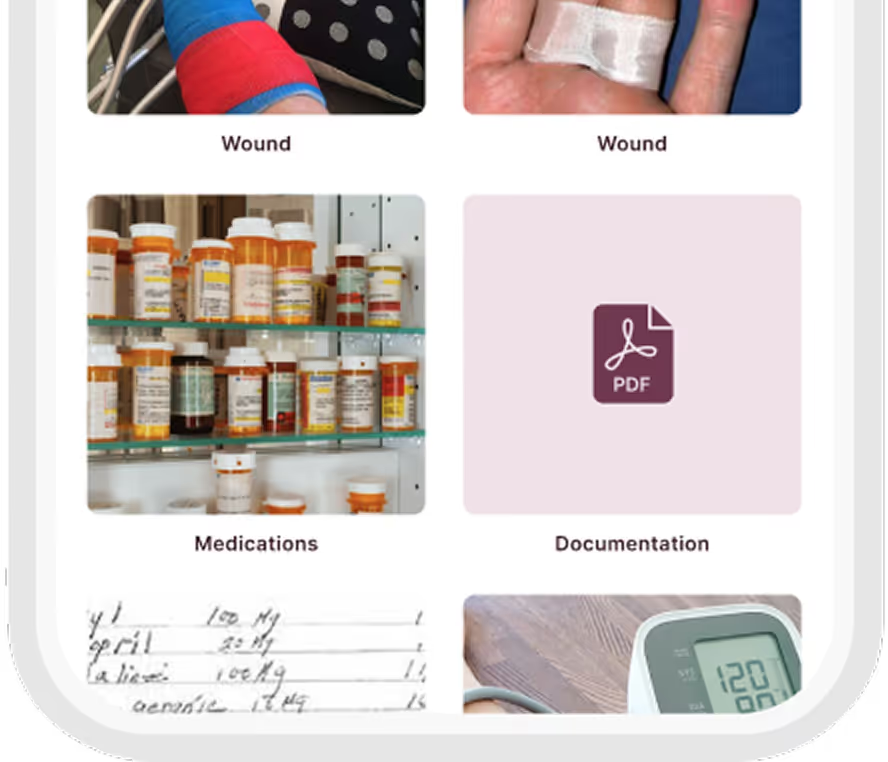
Now, she simply snaps and uploads a picture of the patient’s medication list, and looks over the reconciled list Apricot generates from her photos, post-visit dictation, and referral documents.
When it comes to wound care documentation, Kelly says this process was prone to error when done manually — she would have to take great care to make sure the measurements were right, that she didn’t confuse length for width, and that she described the wound accurately.
And now?
"I snap a picture of the wound with my ruler right there so it has my measurements,” Kelly explains. “So I don't have to write that down either.
"I snap a picture of the wound with my ruler right there so it has my measurements,” Kelly explains. “So I don't have to write that down either.
Start of Care narratives ‘make me sound highly intelligent’
Writing assessment narratives used to be the most difficult part of the job, Kelly says, especially when she was first starting out in home health care.
Narratives were intimidating, she explains, because they require the ability to sum up the assessment in a succinct, informative way. “It’s figuring out how to kind of group all of those things together and tie them together in that narrative,” she explains.
Apricot helps clinicians craft clear narratives by taking in all relevant information and generating an accurate summary.
“It makes my narratives look amazing and they make me sound highly intelligent,” Kelly says. “And I'm really particular about my charting.”
“It makes my narratives look amazing and they make me sound highly intelligent,” Kelly says. “And I'm really particular about my charting.”
This means handoffs between clinicians are much more efficient, too. Better narratives mean more consistency in care.
“When I'm looking at the charting and I see another nurse that has charted a start of care, I know exactly what's going on with that patient by reading just their narrative,” Kelly explains.
The impact on documentation quality and Quality Assurance
Aaron Dazey, Director of Clinical Quality Assurance for Choice Health at Home, says Apricot helps fill out interventions in a consistent, accurate manner.
“Interventions are coming through more uniform and appropriate and patient-specific,” Aaron explains. “Now we are able to trust it, which buys us efficiency on the other side.”
“Interventions are coming through more uniform and appropriate and patient-specific,” Aaron explains. “Now we are able to trust it, which buys us efficiency on the other side.”
Rather than have to double-check every single line of paperwork submitted by a clinician, or hunt down answers to missing sections, reviewers can now focus on areas that require their extra attention.
Apricot acts as a “highlighter,” Aaron explains, drawing reviewers to specific areas that need their expertise.
This efficiency has led to a 40 percent increase in QA productivity.
“It causes less fatigue,” he says. “My reviewers do not want to lose it. They're adamant that it takes the nitty-gritty work off of their plate. They would be very upset if we took it away.”
“It causes less fatigue,” he says. “My reviewers do not want to lose it. They're adamant that it takes the nitty-gritty work off of their plate. They would be very upset if we took it away.”
Aaron says Apricot reduced the time each task stays in the “held stage” in Homecare Homebase. Documentation QA is more efficient than ever before. This efficiency gain supports faster patient processing and billing.
Lauren Swetnam, VP of Enterprise Operations for Choice Health at Home, agrees.
“The feedback from our review team is that they can be more efficient because they know exactly where to look,” she says.
Lauren says Choice Health at Home plans to examine and adjust its point-value system later this year, thanks to the efficiencies Apricot has provided the agency.

Every great partnership starts with a conversation
Give your team their time back. Because every minute spent on paperwork is a minute lost for patient care.