Complete, defensible ICD-10 coding for every OASIS visit
Clinician-Informed Coding, F2F Validation, and Documentation Alignment for coding that reflects the complete clinical picture.

Surface the right diagnoses
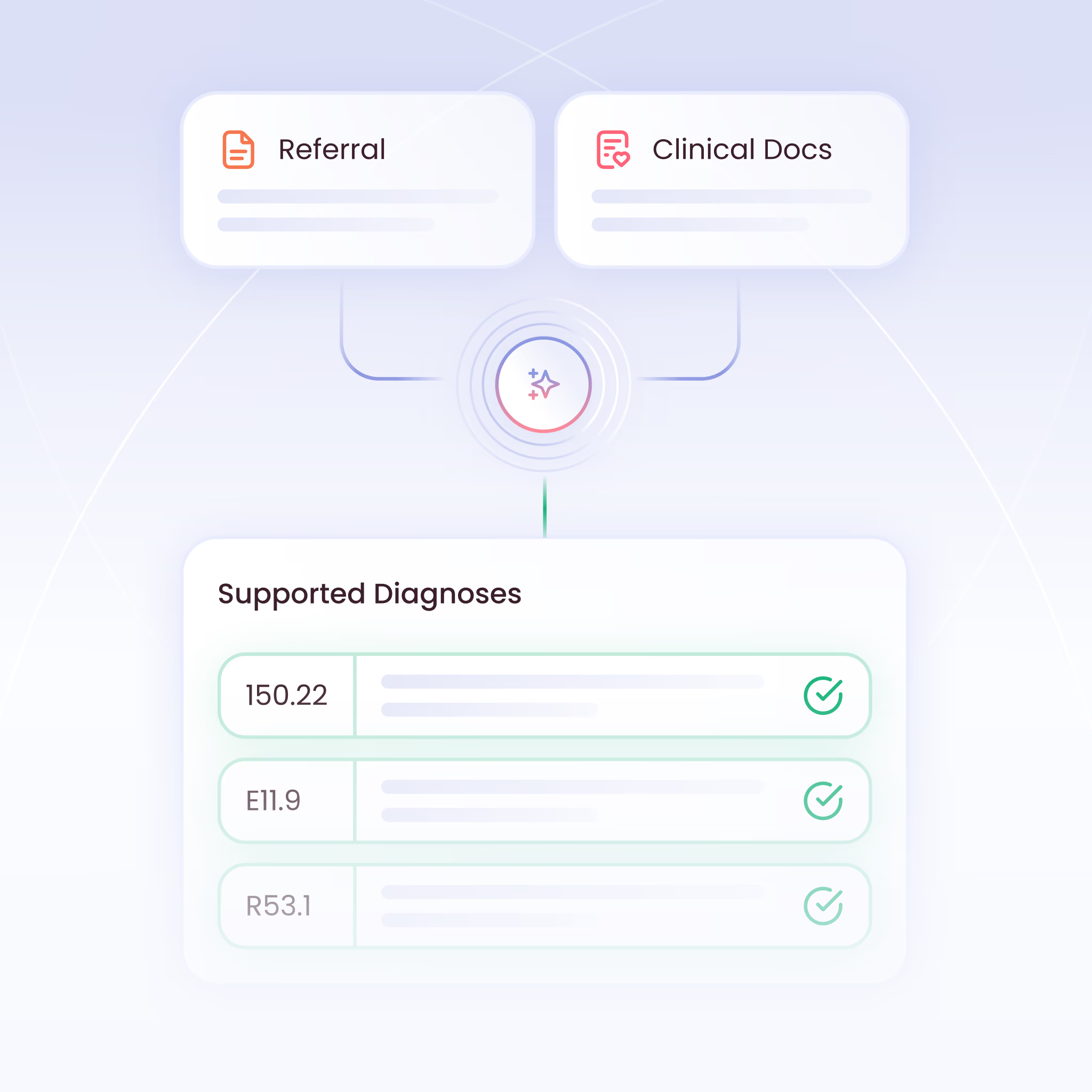
Apricot reviews referral and clinical documentation to identify diagnoses supported by the complete patient story.
Analyzes referral documents and visit documentation
Identifies supportable diagnoses across the patient record
Continuously refines recommendations as new evidence becomes available
Continuously validate support
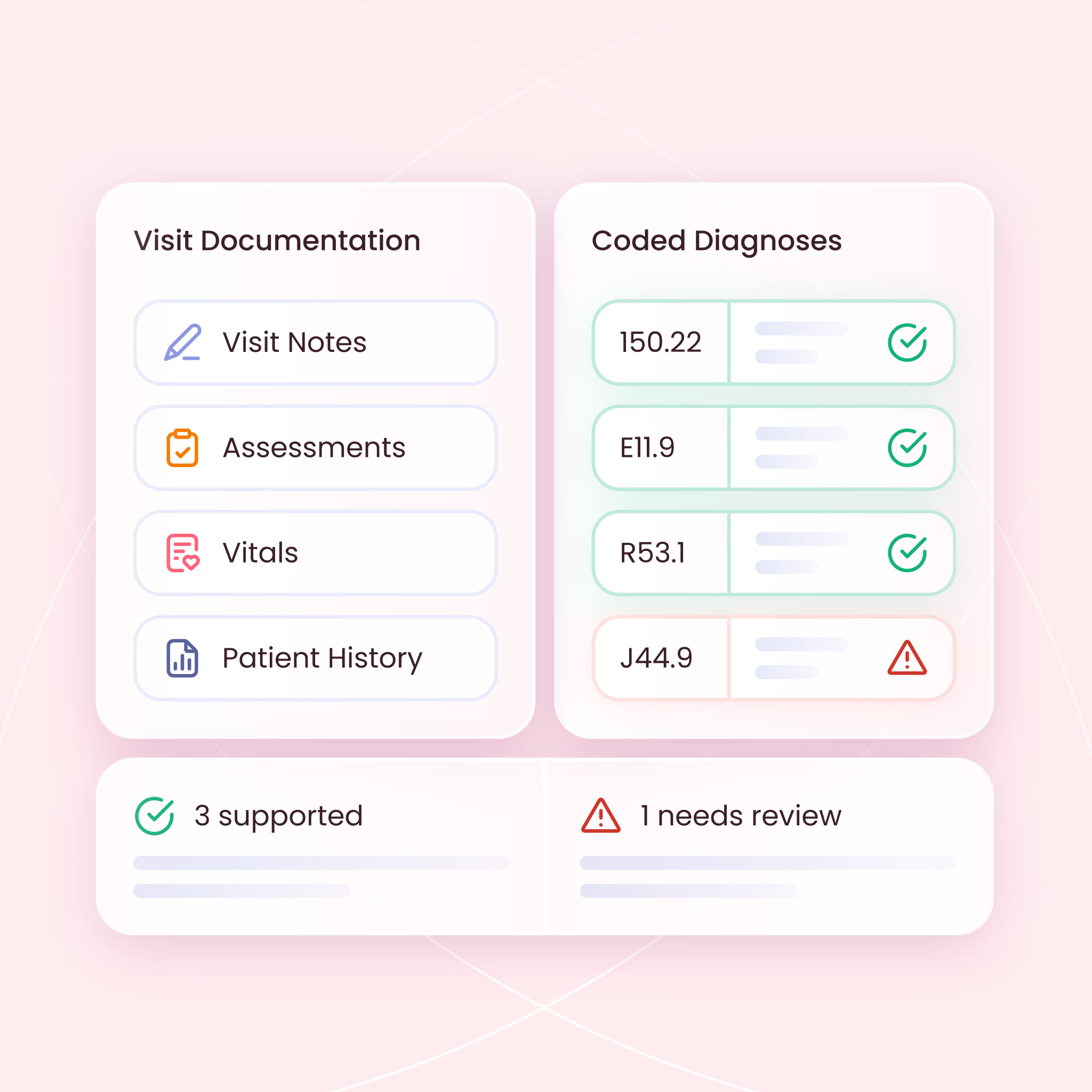
Apricot incorporates clinician findings and diagnoses to generate documentation aligned with the patient’s current condition.
Validates face-to-face documentation against coded diagnoses
Highlights documentation gaps and unsupported conditions
Provides reasoning behind diagnosis selection and ordering
Strengthen the entire chart
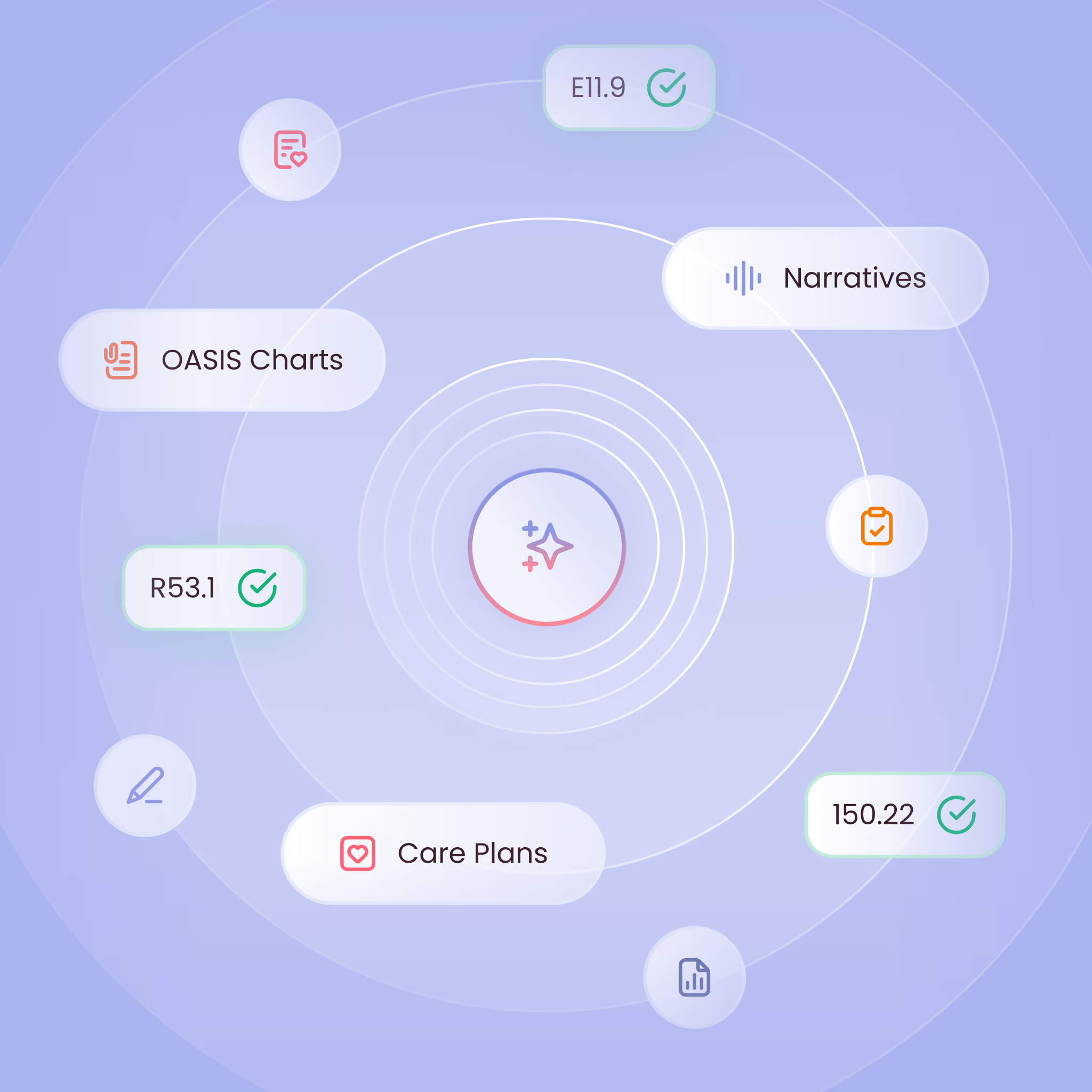
Apricot uses diagnosis intelligence to inform documentation generation and actively improve alignment before submission.
Aligns care plans, narratives, and OASIS charting to coded conditions and your clinical pathways
Reinforces diagnosis support throughout the patient record
Reduces back-and-forth between clinicians, coders, and QA reviewers
The industry's most complete documentation integration
We align to your workflows, QA standards, audit requirements, and documentation preferences while staying continuously synced as your EMR evolves. Clinicians complete documentation once in Apricot, and it arrives fully complete in the EMR with nothing left to review, edit, or finish.

Why home health teams choose Apricot
The best measure of our success is the success of our customers. Read their stories, experiences, and results.


FAQs
Explore out most frequently asked questions. If you can’t find the answer you’re looking for, we’re here for you.
Every recommendation includes the reasoning behind it, so coders can evaluate the logic, not just the output. If a coder disagrees, they override directly in the EMR. Apricot never submits on behalf of the agency. The final code set is always reviewed and finalized by your team before anything goes out.
Yes. Every diagnosis recommendation includes the reasoning behind the code selection and ordering. Coders can see why a diagnosis was included, what clinical evidence supports it, and how it was prioritized. Your team has full visibility into the logic before finalizing anything.
Apricot is designed to surface all supportable diagnoses, not just those that come over in the referral. The coding and documentation engines are bi-directional: diagnosis intelligence informs how documentation is generated, and clinical findings from the visit inform coding. Both improve each other, so the chart reflects the full clinical picture rather than just what was documented at intake.
Most coding tools work from whatever documentation you hand them. Apricot works from the full clinical picture: referral documents, in-home findings, photos, and the post-visit debrief. That means Apricot can surface supportable diagnoses that weren't in the referral but are backed by what actually happened during the visit. And because the coding and documentation engines are bi-directional, each one continuously informs and improves the other—something standalone tools can't do.
Apricot treats coding and documentation as a single connected process, not two sequential steps. After the post-visit interview, Apricot generates a working diagnosis set that feeds directly back into documentation generation. The care plan, clinical narrative, and OASIS charting are all produced with that coding context in mind, so documentation and coding tell the same story from the start.
Apricot transmits the completed code set directly into your EMR. Your coding team reviews, makes any adjustments, and submits from there.
Yes, and Apricot handles it proactively rather than waiting to be asked. We continuously review edits and output quality to identify opportunities to improve agency-specific prompting. Your team also has a direct feedback loop with our support team. If something isn't working the way you'd like, we move quickly to make changes.
Every great partnership starts with a conversation
See how Apricot partners with agencies like yours to improve chart alignment and a complete clinical picture.